Billiard Set Specs Explained: Ball Chemistry, Cue Taper & Room Clearance
Before buying a ball set, cue, or home pool table, check four engineering numbers that determine how your setup plays and whether your cues will hit the drywall.
Ball Chemistry: Cast Phenolic Resin vs. Polyester
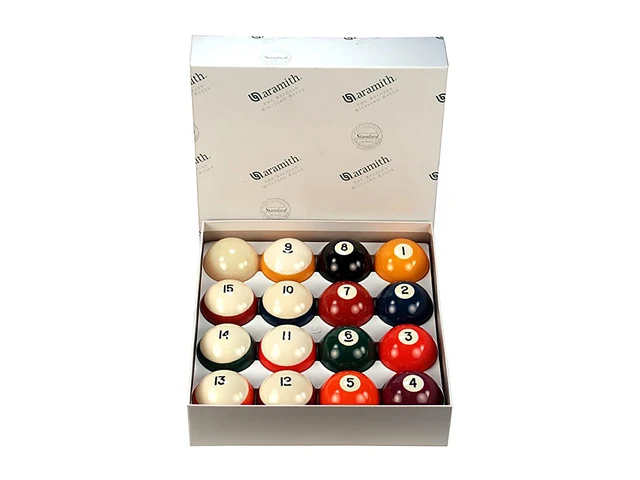
Regulation pool balls measure 2-1/4 inches (57.2 mm) in diameter and weigh 6 oz (170 g). What separates tournament balls (Aramith) from entry-level balls (Mizerak P1672) is molecular cross-linking. Pure phenolic resin is cured into a homogeneous vitrified sphere with uniform density from core to surface, eliminating wobble on slow rolls.
Rule of thumb: If your table has good wool or worsted cloth, buy pure phenolic resin balls so friction burns don't wear out your felt.
Cue Length (58" vs. 57" vs. 48") & Room Clearance Formula
To calculate minimum room dimensions, take the playfield dimensions and add 2 × cue length. A 58-inch cue needs 4 feet 10 inches of clear backswing space on all four sides. Where a staircase, basement pole, or wall cuts clearance down to 3.5–4 feet, a 48-inch 1-piece Canadian maple shorty cue prevents drywall dents.
Rule of thumb: Measure your narrowest wall-to-rail gap before choosing cue lengths.
Cue Shaft Wood, Pro Taper & 13mm Leather Tips
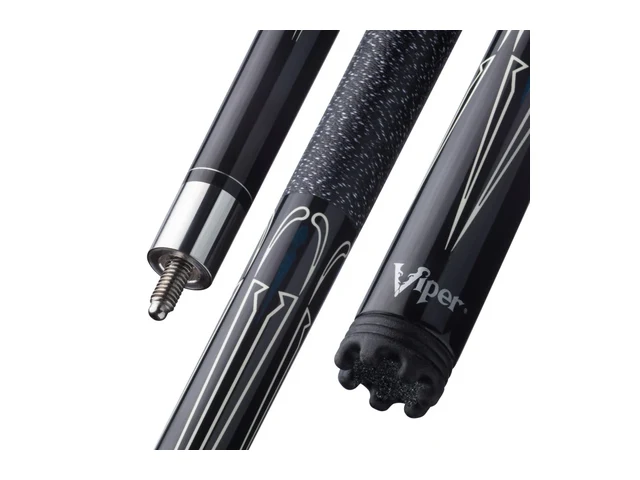
Kiln-dried Grade-A Canadian hardrock maple resists warping and delivers crisp hit feedback. Avoid slip-on plastic ferrules; look for glued 13 mm Le Pro leather tips that hold chalk and let you apply top follow, bottom draw, and side English.
Rule of thumb: Store 2-piece cues vertically or inside a foam-lined hard case (like the Casemaster Q-Vault) away from damp walls.
Compact Home Tables: 6.5' Cabinet vs. 6' Folding Leg
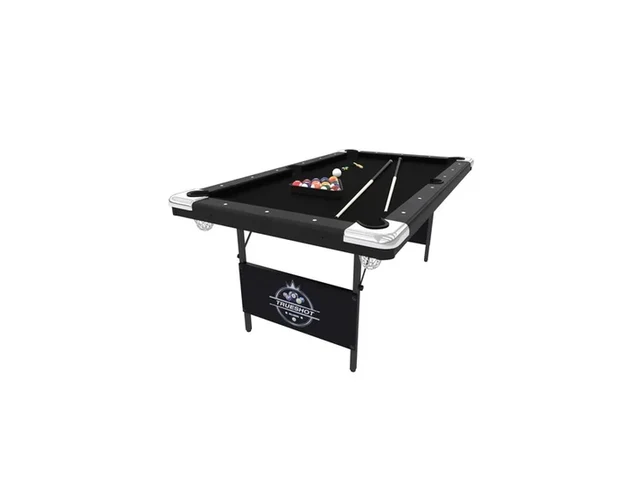
If your room can't fit a 700-pound 8-foot slate table, you have two practical options: a permanent 6.5-foot cabinet table with K66 cushions and automatic ball return (Mizerak Donovan), or a 6-foot folding-leg table (Fat Cat Trueshot) that stores upright against a wall.
Rule of thumb: Use a carpenter's level on the playbed leg levelers before your first rack.
3 benchmark picks
Ready to pick?
Questions
Why do phenolic resin pool balls matter more than polyester balls?
During a hard break or power shot, friction between the ball and table cloth can momentarily reach 400°F+. Cheaper polyester balls soften under that friction, picking up flat spots and leaving white burn marks on your felt. Belgian Aramith pure phenolic resin resists friction heat, stays spherical for decades, and protects expensive table cloth.
How much room clearance do I need around a home pool table?
Add twice your cue length to both the length and width of the playing surface. With standard 58-inch cues, a 6.5-foot table needs roughly 15' × 12.5'. If one side of your room has a column or tight wall, keeping a 48-inch Viper Shorty cue on hand trims 10 inches off the required clearance on that side.
What tip diameter should I choose for an all-around home or league cue?
A 13 mm leather tip (standard on Viper Sinister, Desperado, and Commercial cues) is the most forgiving all-around diameter, offering a broad sweet spot for center-ball hits while still gripping chalk cleanly for draw and side spin.
Why don't you display static prices or star ratings?
Amazon pricing and stock fluctuate daily. Instead of printing stale numbers, every card links directly to the verified Amazon listing so you can check current pricing.